1. 最大匹配算法

最大匹配法是指通过词典进行单向分词,优先选择词的长度,逐步对句子扫描分词

我们举个从左向右的例子

1
2
3
4
5
6
7
8
9
10
11
12
13
14
15
16
17
18
19
假设当前句子为:  你学会最大匹配算法了吗 
词典当中有 你 学会 学 会 最大匹配算法 了 吗(其实还有最大 匹配等等就不写了)

第一次分词 | 你学会最大匹配算法了吗
你学会最大匹配算法了吗 没有这个词
你学会最大匹配算法了 没有这个词
你学会最大匹配算法 没有这个词
你学会最大匹配算 没有这个词
...
你 对咯 那就下一个


第二次分词 | 学会最大匹配算法了吗
显然结果是 学会

第三次分词 | 最大匹配算法了吗
这里就有个问题 选择 最大匹配算法 还是 最大|匹配|算法
我们首先要考虑的肯定是词的长度越长越好 词典之中已经拥有显著的意义就没必要在分词
所以选择 最大匹配算法

最大匹配法主要包括正向最大匹配法(FMM,刚刚这个例子就是)、反向最大匹配法(BMM)和双向最大匹配法,均是基于词典的

缺点有:

因为是基于词典的 所以如果新词没记录没更新,就会识别不出来

2. 正向匹配算法(FMM)

也就是我刚刚上面提到的 你学会最大匹配算法了吗

分词为 你|学会|最大匹配算法|了吗

下面是cpp简易的代码

1
2
3
4
5
6
7
8
9
10
11
12
13
14
15
16
17
18
19
20
21
22
23
24
25
26
27
28
29
30
31
32
33
34
35
36
37
38
void clearlove13()
{
std::unordered_set<std::string> dict = {
"你",
"学会",
"最大匹配算法",
"了吗"};
//当作词典
std::string s = "你学会最大匹配算法了吗";
int mx = 0;
for (auto &w : dict) {
mx = std::max(mx, (int)w.size());
}
std::vector<std::string> res;
int n = s.size();
for (int i = 0; i < n;) {
int len = std::min(mx, n - i);
bool ok = false;
//逐长度查询
while (len) {
std::string cur = s.substr(i, len);
if (dict.count(cur)) {
res.push_back(cur);
i += len;
ok = true;
break;
}
len--;
}
if (!ok) {
res.push_back(s.substr(i, 1));
i++;
}
}
for (auto &x : res) {
std::cout << x << '\n';
}
}

但是呢 我们可以考虑优化 譬如说将dict按照长度在进行分层 大致如下

1
2
3
4
5
6
7
8
std::vector<std::unordered_set<std::string>> dict(max_len + 1);
dict[1].insert("你");
dict[2].insert("学会");
dict[2].insert("了吗");
dict[6].insert("最大匹配算法");


或者说 我们可以考虑引入字典树 在对比的时候直接省去查询的性能 甚至于占用的内存也没有多大 再去用BFS去找到对应的集合

输出结果就这样

3. 反向匹配算法(BMM)以及双向匹配算法

BMM就是相当于把FMM倒过来做一遍

而双向匹配算法则是比较FMM跟BMM 并选用两个标准

(1)首先看两种方法结果的分词数,分词数越少越好;

(2)分词数相同的情况下,看单个词的数量,越少越好;

1
2
3
4
5
6
7
8
9
10
11
12
13
14
15
16
17
18
19
20
21
22
23
24
25
26
27
28
29
30
31
32
33
34
35
36
37
38
39
40
41
42
43
44
45
46
47
48
49
50
51
52
53
54
55
56
57
58
59
60
61
62
63
64
65
66
67
68
69
70
71
72
73
74
75
76
77
78
79
80
81
82
83
84
85
86
87
88
89
90
91
92
93
94
95
96
97
98
99
100
101
102
103
104
105
106
107
108
109
110
111
112
113
114
115
116
117
118
119
120
121
122
123
std::vector<std::string> fmm(
std::string &s,
std::unordered_set<std::string> &dict,
int mx)
{
std::vector<std::string> res;
int n = s.size();
for (int i = 0; i < n;) {
int len = std::min(mx, n - i);
bool ok = false;
while (len) {
std::string cur = s.substr(i, len);
if (dict.count(cur)) {
res.push_back(cur);
i += len;
ok = true;
break;
}
len--;
}
if (!ok) {
res.push_back(s.substr(i, 1));
i++;
}
}
return res;
}

std::vector<std::string> bmm(
std::string &s,
std::unordered_set<std::string> &dict,
int mx)
{
std::vector<std::string> res;
int i = (int)s.size() - 1;
while (i >= 0) {
int len = std::min(mx, i + 1);
bool ok = false;
while (len) {
std::string cur = s.substr(i - len + 1, len);
if (dict.count(cur)) {
res.push_back(cur);
i -= len;
ok = true;
break;
}
len--;
}
if (!ok) {
res.push_back(s.substr(i, 1));
i--;
}
}
std::reverse(res.begin(), res.end());
return res;
}
//单个字符个数
int count_single(const std::vector<std::string> &v)
{
int res = 0;
for (auto &s : v) {
if (s.size() == 1) {
res++;
}
}

return res;
}

std::vector<std::string> bidirectional(
std::vector<std::string> &f,
std::vector<std::string> &b)
{
if (f.size() < b.size()) {
return f;
}
if (b.size() < f.size()) {
return b;
}
int sf = count_single(f);
int sb = count_single(b);
if (sf < sb) {
return f;
}
if (sb < sf) {
return b;
}
return f;
}

void clearlove13()
{
std::unordered_set<std::string> dict = {
"研究",
"研究生",
"生命",
"命",
"起源"};

std::string s = "研究生命起源";
int mx = 0;
for (auto &w : dict) {
mx = std::max(mx, (int)w.size());
}
auto f = fmm(s, dict, mx);
auto b = bmm(s, dict, mx);
auto ans = bidirectional(f, b);
std::cout << "FMM:\n";
for (auto &x : f) {
std::cout << x << '\n';
}
std::cout << '\n';
std::cout << "BMM:\n";
for (auto &x : b) {
std::cout << x << '\n';
}
std::cout << '\n';
std::cout << "BiMM:\n";
for (auto &x : ans) {
std::cout << x << '\n';
}
}

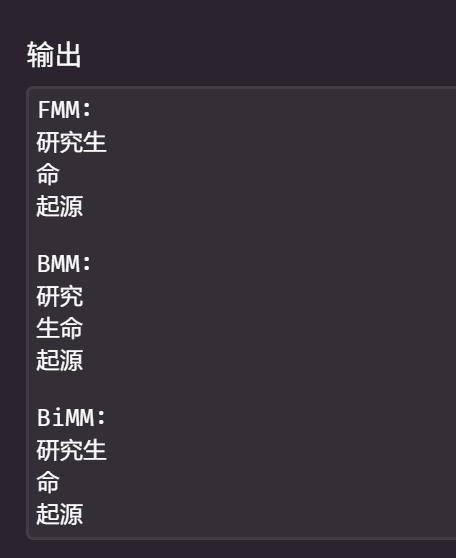
结果如此

4. 小结

可以看到在第三节双向匹配的效果不一定比单向匹配好 一方面是因为这个数据小 还有就是正如我们上面所说的词典不完善

我们也可以通过一些数据结构去优化查询性能